
Best Gifts for Kids 2027: Why Gifts Fail and What to Buy Instead
Best Gifts for Kids 2027: Why Gifts Fail and What to Buy Instead
Almost every forgotten gift failed for a predictable reason. It was chosen for the age printed on the box rather than the actual child. It impressed the adults in the room and nobody else. It was one of nine things opened in a single afternoon. Or it was quietly an attempt to steer a kid toward a hobby someone else wanted for them.

None of those are about spending too little. They're about the wrong decision at the moment of choosing. This guide to the best gifts for kids 2027 shoppers are weighing works backwards from those failures, because knowing why gifts get abandoned is more useful than another list of products. Starting with the category adults undervalue most.
1. Magic Kits: The Gift Adults Underestimate
Plenty of grown-ups look at a magic set and see a novelty item, something that gets opened, tried twice, and put in a cupboard. Kids see it completely differently, and the gap between those two readings is why magic ends up being one of the most reliably used gifts on any list.
The difference comes down to how it gets used. A toy gives back the same experience each time, so interest declines with every use. A trick gives back a reaction, and reactions vary with every new person. That's why a child will happily perform the same effect thirty times when they'd have abandoned a toy after the third. The repetition that would bore them elsewhere is the entire point here.
It also avoids most of the failure modes in this article. It doesn't get outgrown in a season, because the material gets harder as the child improves. It doesn't need an adult to run it. It's rarely duplicated by another guest. And it doesn't depend on knowing their size, their favorite character, or what they already own.
The one decision that matters is difficulty. Teen-level sets rely on sleight of hand that takes months and will frustrate a young child into quitting, while childish packaging gets dismissed on sight by anyone over nine. The range at Magical Kits covers beginner through advanced, so it's worth comparing levels in the magic kits collection with the specific child in mind. Kits with video instruction are consistently the better buy, since timing and delivery can't be learned from a diagram.
2. The Mistake: Buying the Age on the Box
Age ratings describe safety and average ability, not the child in front of you. A capable seven-year-old is bored by a 7+ set; a cautious one is frustrated by it.
Buy for the level, not the birthday
Watch what they currently manage without help and aim a step above that.
Err upward after about seven
Kids reach toward a mild challenge and reject anything that reads as babyish. Slightly hard beats slightly easy.
Check the packaging, not just the contents
A well-chosen gift in cartoonish branding often doesn't survive first impressions with an older child.
3. The Mistake: Buying What Impresses the Room
Some gifts are designed to get a reaction at the moment of opening. That's a different goal from getting used in March.
- Ask what the tenth use looks like. Single-outcome toys peak on day one and decline from there.
- Favor open-ended over scripted. If the child decides what happens next, it lasts longer.
- Be honest about size and noise. An enormous playset in a small home is a burden dressed as a present.
- Skip the showpiece if it needs an adult. Anything requiring supervision gets used on the days someone has time, which is fewer days than you think.
4. The Mistake: Too Much at Once
Nine gifts in one afternoon guarantees that most of them get three minutes of attention and then blur together.
Fewer, better
One well-chosen gift genuinely outperforms four adequate ones, and kids remember the standout rather than the volume.
Stagger the opening
Holding some back for later in the week gives each one a real first day.
Coordinate with other adults
A quick message between relatives prevents duplicates and the pile-up effect entirely.
5. The Mistake: Buying the Interest You Wish They Had
This is the most common expensive miss. The science kit for a kid who only wants to draw. The instrument nobody asked for.
- Follow the obsession that already exists, even if it seems narrow or repetitive
- Buy depth, not breadth. Three things about the interest they have beats one about something they don't.
- Extensions get used immediately, because the setup and the enthusiasm are already there
- If you want to introduce something new, make it small and additional rather than the main gift
6. When You're Planning the Party, Not Just the Gift
If the occasion is an event you're hosting, entertainment solves a problem no wrapped present can. A magic show handles the hardest stretch of a kids' party, and it does it across a mixed crowd.
That range is the practical benefit. Most parties involve several ages plus a room of adults, and one performance works on all of them for different reasons: younger children are simply amazed, older ones spend the show trying to catch the method, and the parents get a stretch where nobody needs them. Magical Katrina's shows are built with this kind of audience in mind.
If a child stays interested afterward, lessons are a stronger follow-up than a second kit. Virtual magic lessons give structured material and direct correction, which matters because self-taught kids nearly always plateau on presentation rather than technique.
7. The Mistake: Assuming More Stuff Means More Joy
For a household already full of toys, an object can be the least welcome option available.
- Memberships to a zoo, science center, climbing gym, or museum
- Lesson packages in magic, music, art, or a sport they've already mentioned
- Tickets to a show or game, ideally including a friend
- Subscription boxes tied to one specific interest, spreading the excitement across months
- Upgraded everyday items like a good backpack or water bottle, which get daily use and no clutter
8. A Quick Test Before You Buy
Run any candidate through these questions and most of the common kids gift ideas for 2027 sort themselves out fast.
Can they use it without an adult? If not, it gets used far less often than you're imagining.
Can they get better at it? Anything with room to improve holds attention for months. Anything mastered in an afternoon is finished by the weekend.
Would they choose it themselves? If the honest answer is no, reconsider, however good the gift is on paper.
Does anyone else join in? Gifts that work with siblings or friends get dramatically more use at every age.
Where does it live? If there's no obvious place for it in the house, that's a real problem and not a minor one.
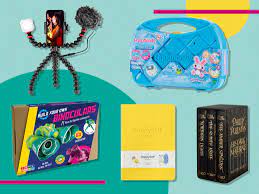
Gifts don't fail because of budget. They fail because they were chosen for the occasion rather than the child. The ones that last give a kid something to get good at and a reason to show someone, which is why skill-based options keep outperforming the flashier picks on any honest list of the best gifts for kids in 2027.
If you want the option that avoids the most common mistakes at once, magic is a strong place to start. Have a look at the magic kits sorted by skill level to find the right fit, or consider a live show if you're the one planning the party.
